
Nursery
In the Nursery, teachers build a rich environment full of developmentally appropriate activities. Children play on the Fish Climbing Structure. Skills grow through play.
Explore NurseryThis finished website is ready. Pick the monthly plan you want and activate it without scheduling a call.
We run your website for you.
We run your front desk for you.
We run your front office for you.
You'll be taken to secure card checkout (Stripe). The website, hosting, and owner portal activate automatically after payment. Texting switches on once the carriers approve your registration, usually 1–2 weeks. See everything in each plan →
Your website is saved. Please try secure checkout again in a few minutes — no call is required.
Your owner account is being activated and the clean production version is publishing automatically. Watch your email for the portal invite.
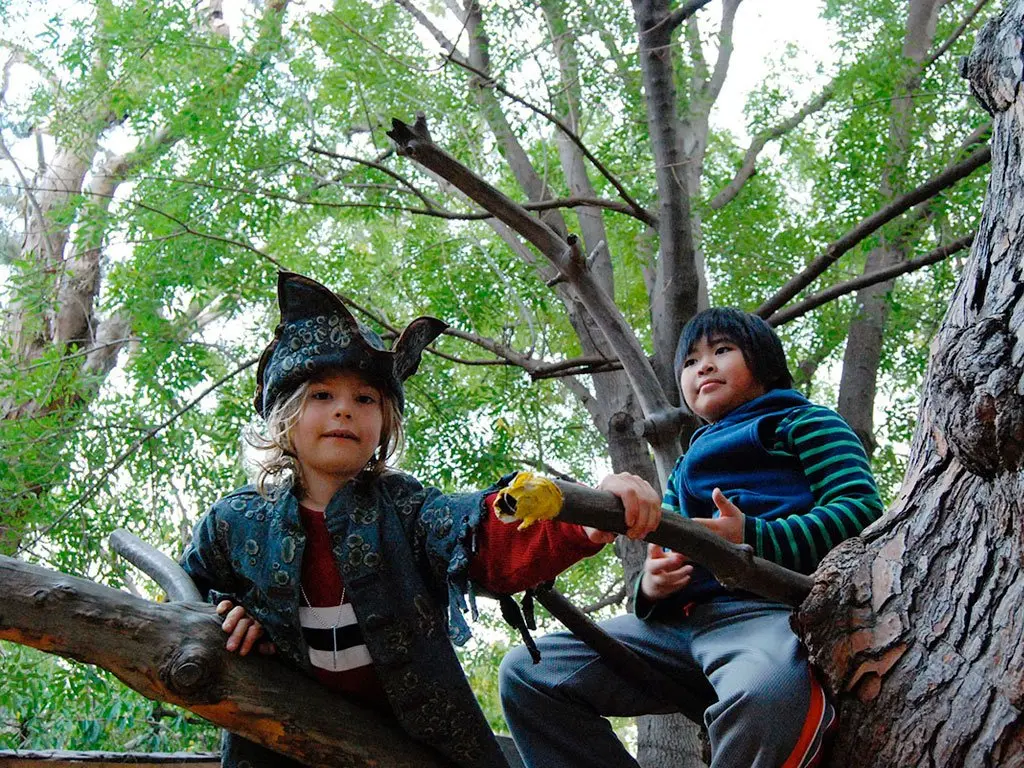
Where children are free to play and learn.
We think children are capable. They direct their own play and learning. Teachers do not stand at the front of the room. We do not use rewards, punishments, grades or tests. Children spend most of their days outdoors, rain or shine, on a campus shaded by trees.
Play Mountain Place sits on a quiet street close to Ballona Creek, on the edge of Culver City. A canopy of trees shades the spacious, historic campus, and children spend most of their days outdoors, rain or shine. Inside, rooms are set up with open-ended materials children can reach and choose and move around. Adults stay close and available, but they follow the children's plans rather than steering the day.
Teachers do not use rewards, punishments, grades, or tests — they do not want children to link learning with coercion, anxiety, or boring rote. Conflicts get talked through, and children are part of the conversation about whatever is next. Alumni come back and remark on how much the campus looks the same as it did in their own time here.
Morning starts with children arriving and settling in at their own pace. If a child needs a moment, a teacher stays close. Children get straight into play — a game already underway, a project left out from yesterday. The outdoors is usually where they head first. Learning is happening there, even when it doesn't look like it.
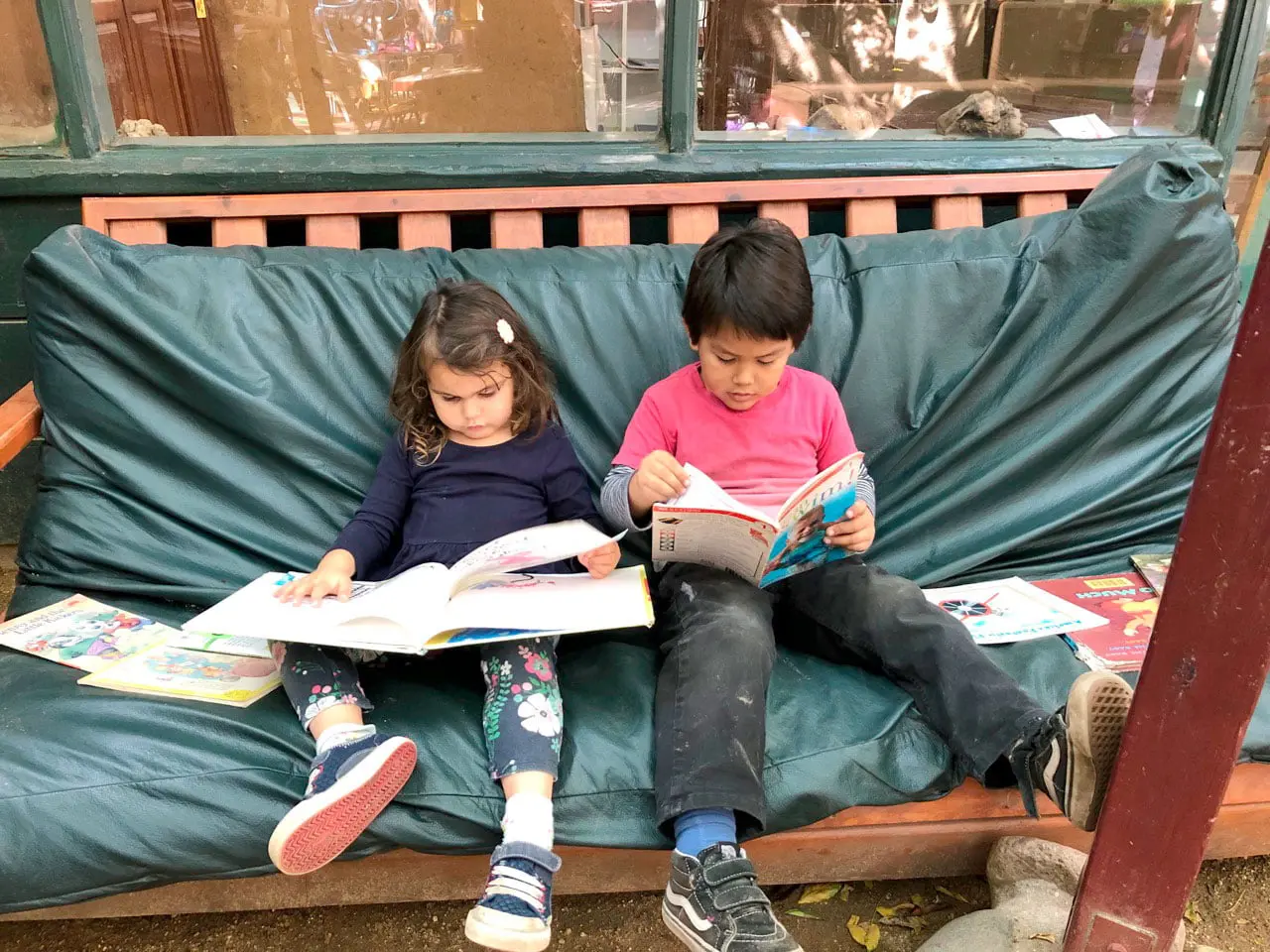
A typical day is long stretches of play, indoors or out depending on weather and what children choose. Teachers offer activities and join in, but do not take over. Snacks and meals break the day into natural parts. Outdoors, children dig, climb, build, and run under the trees. Indoor rooms hold blocks, art, books, and quiet corners for rest.
By afternoon, play often softens — chalk games, quiet work, a last turn on the yard. Children help tidy what they used, then gather their things. At pickup, a parent might hear about a bug found, a tower built, or a friend. The campus keeps its own pace, and the day ends the way it began: unhurried.
At pickup, you hear what your child did that day. Families often ask how children learn to read and write here. Teachers write about that, and you can read their reflections. You can also ask teachers directly. The school gives parents tools for respectful communication at home.
The first weeks are for settling in, for the child and for you. You can ask how drop-off works, what to pack, and what a typical day looks like. Call (323) 870-4381 or email info@playmountain.org to ask your questions.
org. Tell us your child's age and the days you need. Then we will talk with you about next steps.
Come see the classroom your child would join and meet the teachers who run it. Ask every question you have while you are there.
Complete enrollment, then plan a first week that suits your child's routine. Teachers will work with you on the pace of it.
Children from preschool and elementary aged children.
Yes. A tour is how most families decide, and you can bring your child. Children can walk the yard, see the rooms and meet teachers while you ask questions.
For a first day, families usually pack a change of clothes, a comfort item from home, and anything their child needs for the weather. Label everything with your child's name. The school can tell you what else applies for your child's age group.
Schedules differ by age group, and what is open changes through the year. Ask the school directly what is available for your child and the days you need.
If your child's age group is full, you can ask to be contacted when a place opens. The school will let you know as soon as they have news for your child's age.
Come walk the yard, meet the teachers, and bring your child along.